
Guide to Amethyst
Amethyst is the purple variety of the quartz mineral species.
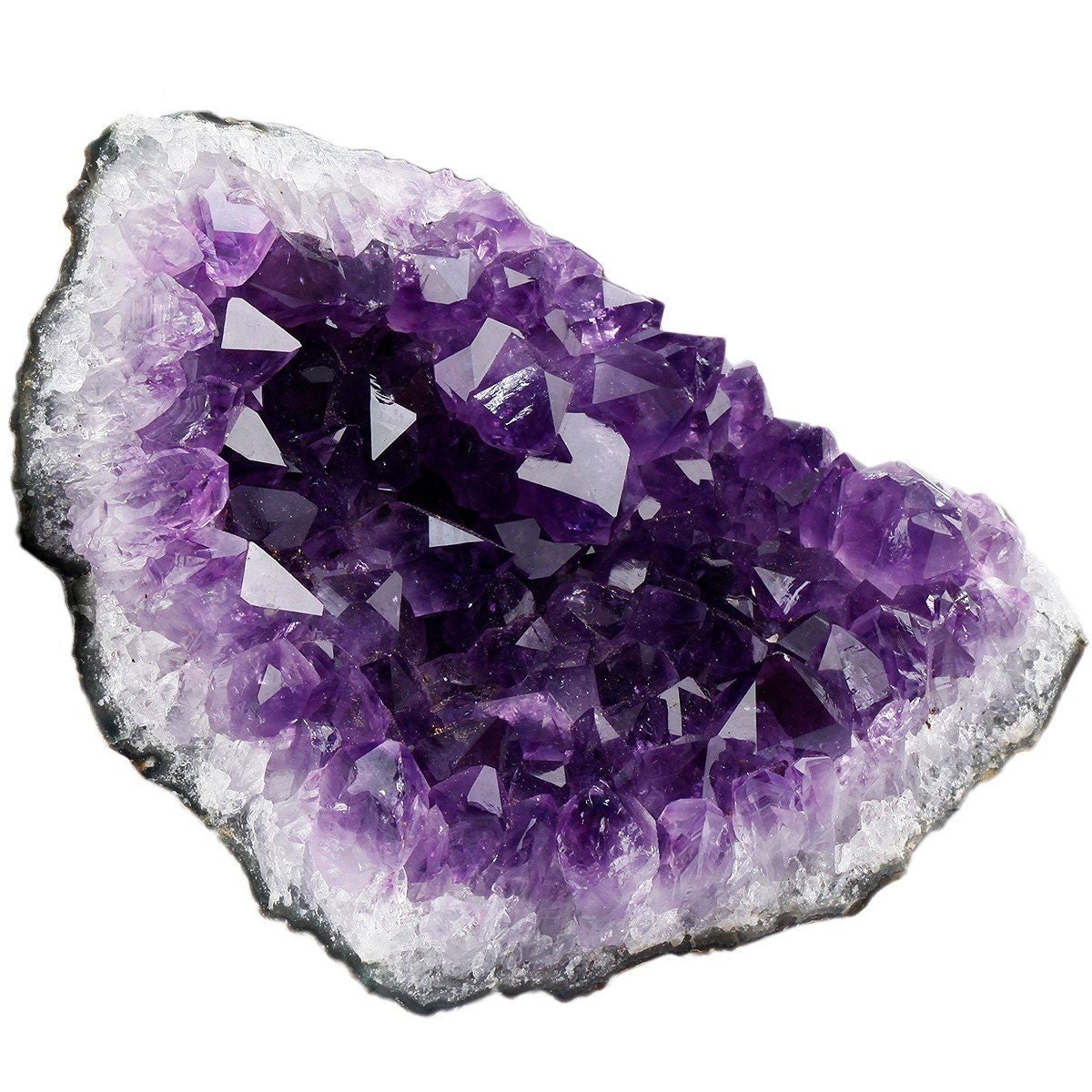
Amethyst’s purple color can range from a light lilac to a deep, intense royal purple, and from brownish to vivid. Amethyst also commonly shows what is called color zoning, which in the case of amethyst usually consists of angular zones of darker to lighter color. The presence of manganese in clear Quartz produces Amethyst, while additional amounts of iron vary the purple coloration. It is sometimes layered with white Quartz as Chevron Amethyst, found in combination with Cacoxenite, mixed with Citrine as Ametrine, or in rare cases, “rutilated” with Goethite.
Fine amethysts have been set in religious jewelry and royal crown jewels for ages. It was once considered equal in value to ruby, emerald, and sapphire. until the 19th Century, when Brazil’s large deposits were discovered. It was believed to prevent intoxication—amethystos means “not drunk” in ancient Greek, where legends associated amethyst with Bacchus, the god of wine.
In today’s world, Amethyst is still a remarkable stone of spirituality and contentment, known for its metaphysical abilities to still the mind and inspire an enhanced meditative state. Its inherent high frequency purifies the aura of any negative energy or attachments, and creates a protective shield of Light around the body, allowing one to remain clear and centered while opening to spiritual direction.
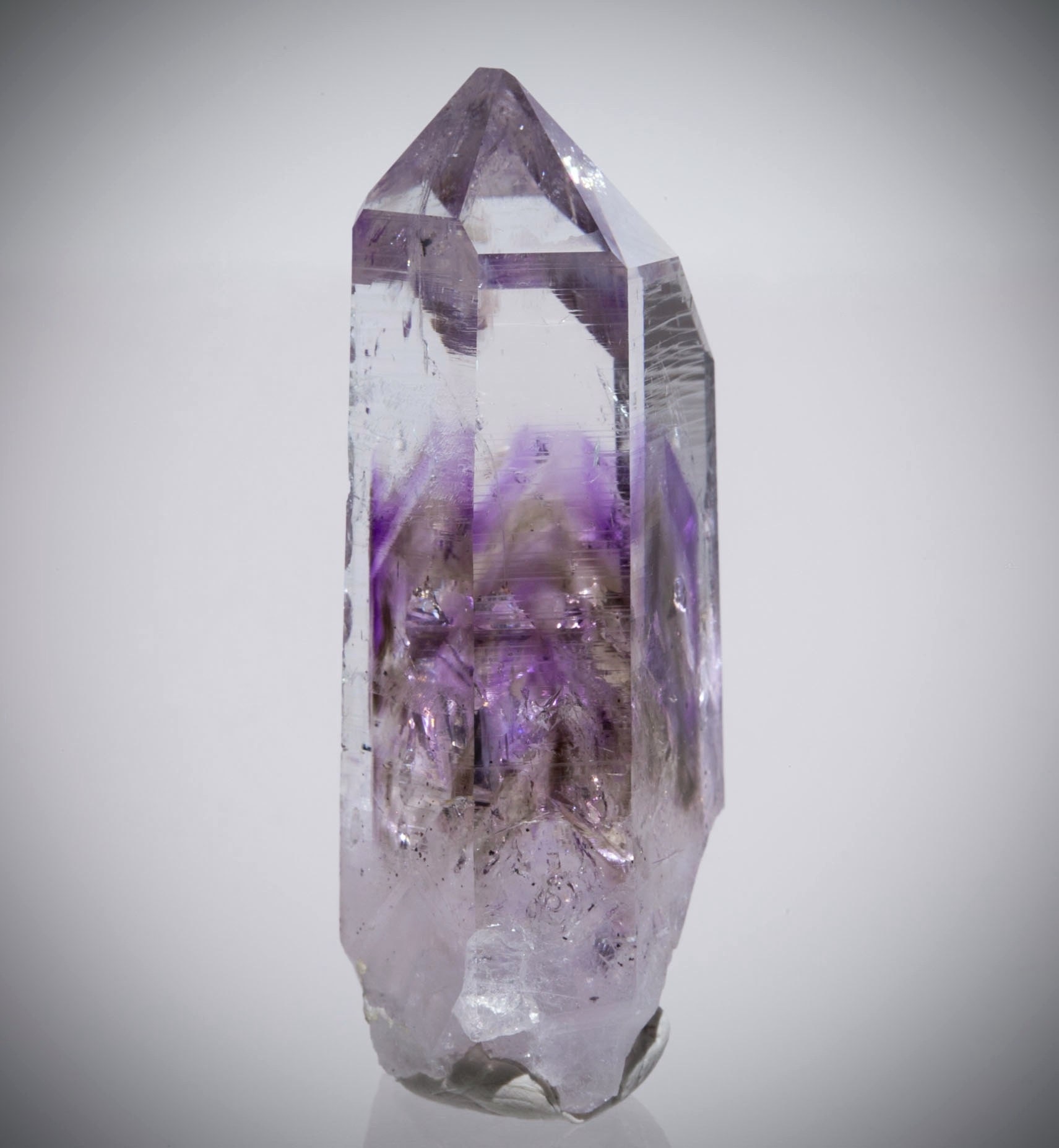
Brandberg Amethyst is a unique and extraordinary blend of Amethyst, Clear and Smoky Quartz together in one exceedingly high-vibrational crystal. It is found only in Namibia, Africa, and is imbued with remarkable phantoms, enhydros, and other rare formations and inclusions.
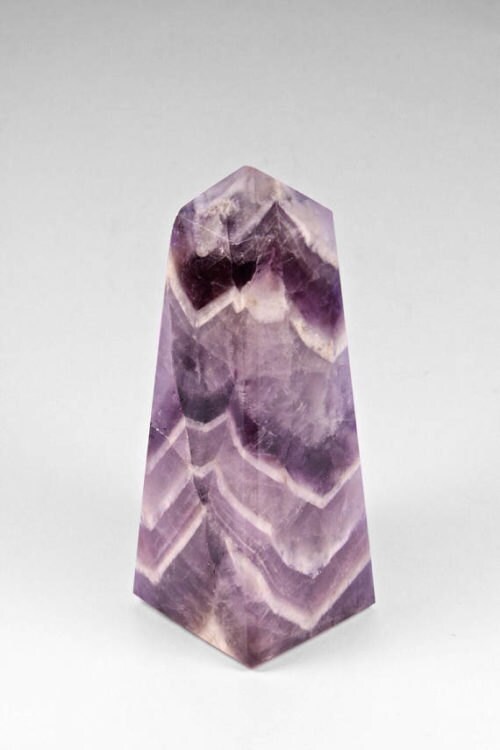
Chevron Amethyst displays v-shaped chevrons of deep purple and white Quartz that “seep” into beautiful layers.
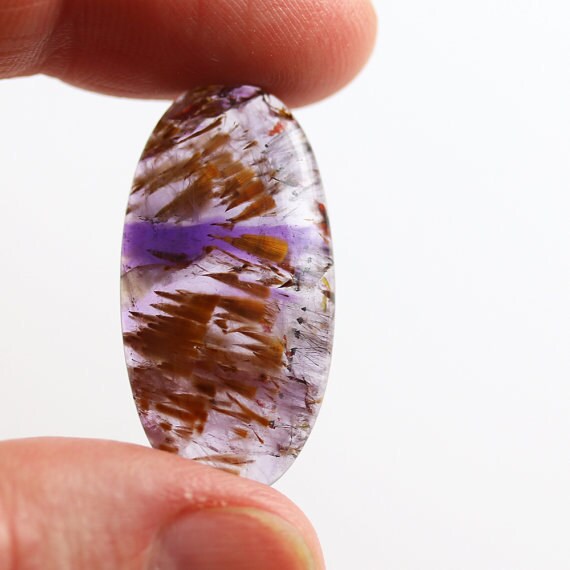
Cacoxenite in Amethyst mingles dark brown to yellow tufts of Cacoxenite, a phosphate mineral and major component in the Super Seven crystal, with the host crystal Amethyst.
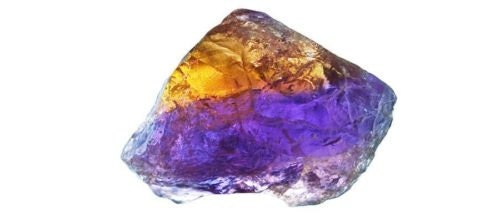
Ametrine is a combination of Amethyst and Citrine within the same crystal.
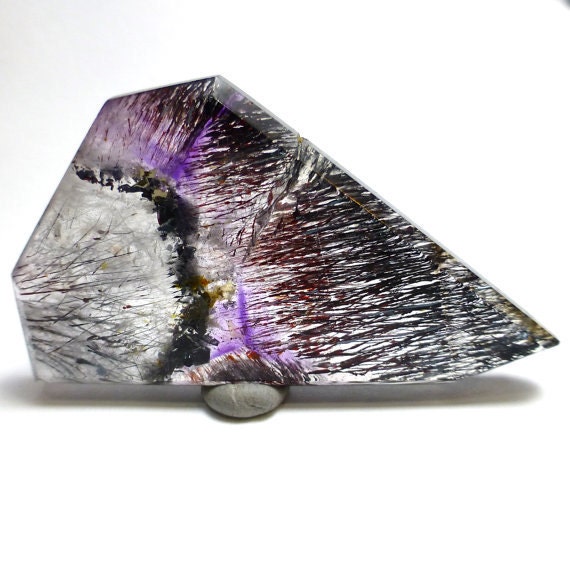
“Rutilated” Amethyst is a rare form of Amethyst which appears to contain Rutile, but actually contains brownish crystals of Goethite, an iron hydroxide mineral also found in the Super Seven crystal. Called the “All-healer,” Amethyst is one of the most effective crystals for healing people, plants and animals. Referred to as “nature’s tranquilizer,” Amethyst calms and soothes, assisting the transmission of neural signals through the brain. Amethyst is the stone of St. Valentine and of faithful lovers because St. Valentine was thought to have worn an Amethyst ring engraved with the image of Cupid. It is also referred to as the “couple’s stone” and gives meaning to relationships that over time, transcends the carnal union and gives way to deeper connection and a more soulful communion. (Information from “Crystal Vaults”)